
For Patients
Guidelines for preparing for examinations and the rules for visiting the clinic.
Preparing for Examinations
MRI Without Contrast
Before the examination:
• remove metal jewelry, watches, hair clips, hearing aids and other metal objects;
• tell the specialist if you have a pacemaker, implants, metal devices or structures, vascular clips, an insulin pump or other medical devices;
• be sure to disclose a pregnancy or possible pregnancy;
• bring the results of previous examinations, if available.
Abdominal MRI
Recommendations:
• avoid eating for 4–6 hours before the examination;
• limit foods that cause excessive gas for 1–2 days beforehand;
• you may drink small amounts of water unless your doctor advises otherwise.
MRI With Contrast
Inform your doctor in advance about:
• kidney disease;
• allergic reactions;
• pregnancy or possible pregnancy;
• any previous reactions to contrast agents.
CT With Contrast
Before the procedure:
• inform your doctor if you are pregnant or may be pregnant;
• remove metal objects from the area being examined;
• provide previous scans and reports, if available.
Also tell your doctor about:
• kidney disease;
• thyroid disorders;
• diabetes;
• allergic reactions, especially to contrast agents.
Your doctor may order a blood creatinine test to assess kidney function.
Mammography
On the day of the examination:
• do not apply deodorant, talcum powder, cream, oil or body powder to your underarms or breasts;
• bring previous mammograms and breast ultrasound results, if available.
Abdominal Ultrasound
Recommendations:
• arrive for the examination on an empty stomach;
• avoid eating for approximately 6–8 hours beforehand;
• reduce foods that cause excessive gas for 1–2 days before the examination.
Bladder Ultrasound
Drink approximately 500–1000 ml of still water 1–1.5 hours before the examination and try not to urinate until the ultrasound is complete.
Pelvic Ultrasound for Women
For a transabdominal ultrasound, the bladder should be full before the examination.
Prostate Ultrasound
Preparation depends on the examination method.
For a transabdominal examination, a full bladder is usually required.
EGD — Gastroscopy
The stomach must be empty for an accurate examination.
Before the procedure:
• your last meal should usually be about 8 hours before the examination;
• do not eat on the morning of the examination;
• do not smoke immediately before the procedure;
• discuss drinking water and taking medicines with your doctor or the endoscopy department.
Be sure to tell your doctor about:
• blood-thinning medications;
• diabetes;
• medication allergies;
• heart and lung diseases.
Colonoscopy
Proper bowel preparation is essential for an informative colonoscopy.
A low-fiber diet is recommended for several days before the examination.
Limit the following:
• vegetables and fruits containing seeds;
• leafy greens;
• berries;
• nuts and seeds;
• whole-grain products.
The day before the examination, the bowel is cleansed with a special preparation according to the prescribed schedule.
The preparation schedule depends on the time of the colonoscopy, the product used and the patient’s health.
It is important to follow all instructions for taking the solution.
If you take anticoagulants, antiplatelet drugs, iron supplements or diabetes medication, tell your doctor in advance. Do not stop taking any medication on your own.
EEG — Electroencephalography
Before the examination:
• wash your hair the day before or on the day of the procedure;
• do not use hairspray, gel, oil, mousse or other styling products;
• if possible, avoid large amounts of coffee, energy drinks and other stimulants before the examination;
• eat 1–2 hours before the procedure; fasting is not recommended for this test.
Holter ECG Monitoring
Before the monitor is fitted:
• take a shower;
• make sure the skin on your chest is clean and dry;
• do not use creams, oils or lotions;
• wear loose, comfortable clothing.
During the examination, follow your usual daily routine and record the following in a diary:
• physical activity;
• sleep;
• stress;
• pain or discomfort;
• palpitations;
• times when you take medication.
Do not get the monitor wet.
ABPM — 24-Hour Ambulatory Blood Pressure Monitoring
Recommendations:
• wear loose clothing with wide sleeves;
• continue your usual routine unless your doctor advises otherwise;
• take medication only as prescribed by your doctor.
Colposcopy
For 24–48 hours before the examination, it is advisable to:
• avoid sexual intercourse;
• avoid vaginal suppositories, creams and medicines unless prescribed by your doctor;
• avoid vaginal douching.
Dental 3D CT / CBCT
Before the examination, remove:
• earrings;
• necklaces;
• removable dentures;
• piercings;
• metal objects around the head and neck.
Women must inform the specialist of pregnancy or possible pregnancy.
Laboratory Tests
For most biochemical tests, blood should be taken in the morning after 8–12 hours without food. Drinking still water is usually allowed.
Before a blood test, it is advisable to:
• avoid intense physical activity;
• avoid alcohol the day before;
• do not smoke immediately before the test;
• sit quietly for 10–15 minutes before blood is drawn.
Preparation may vary depending on the specific test, diagnosis, patient’s age, pregnancy, chronic conditions and the use of contrast agents or sedation.
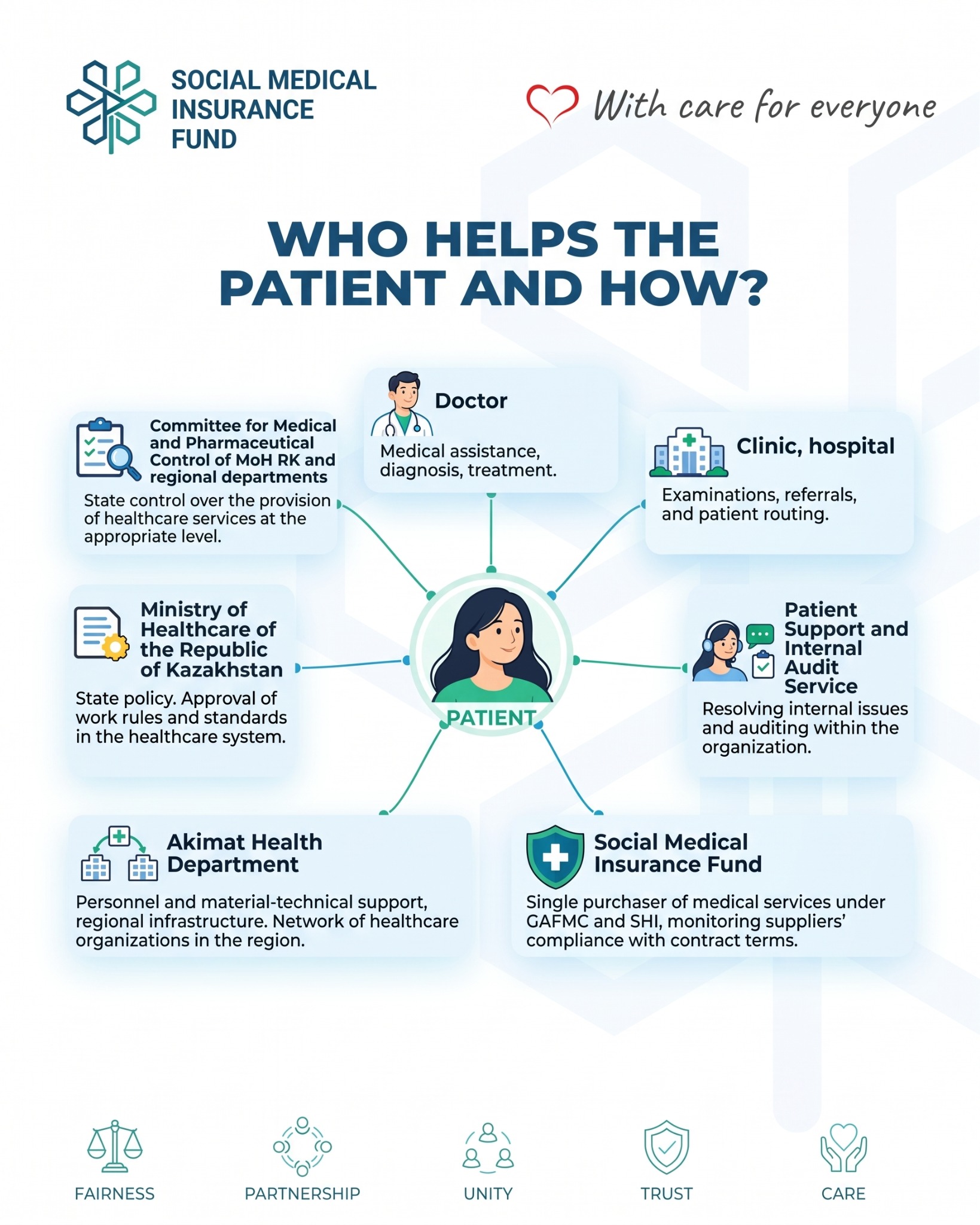
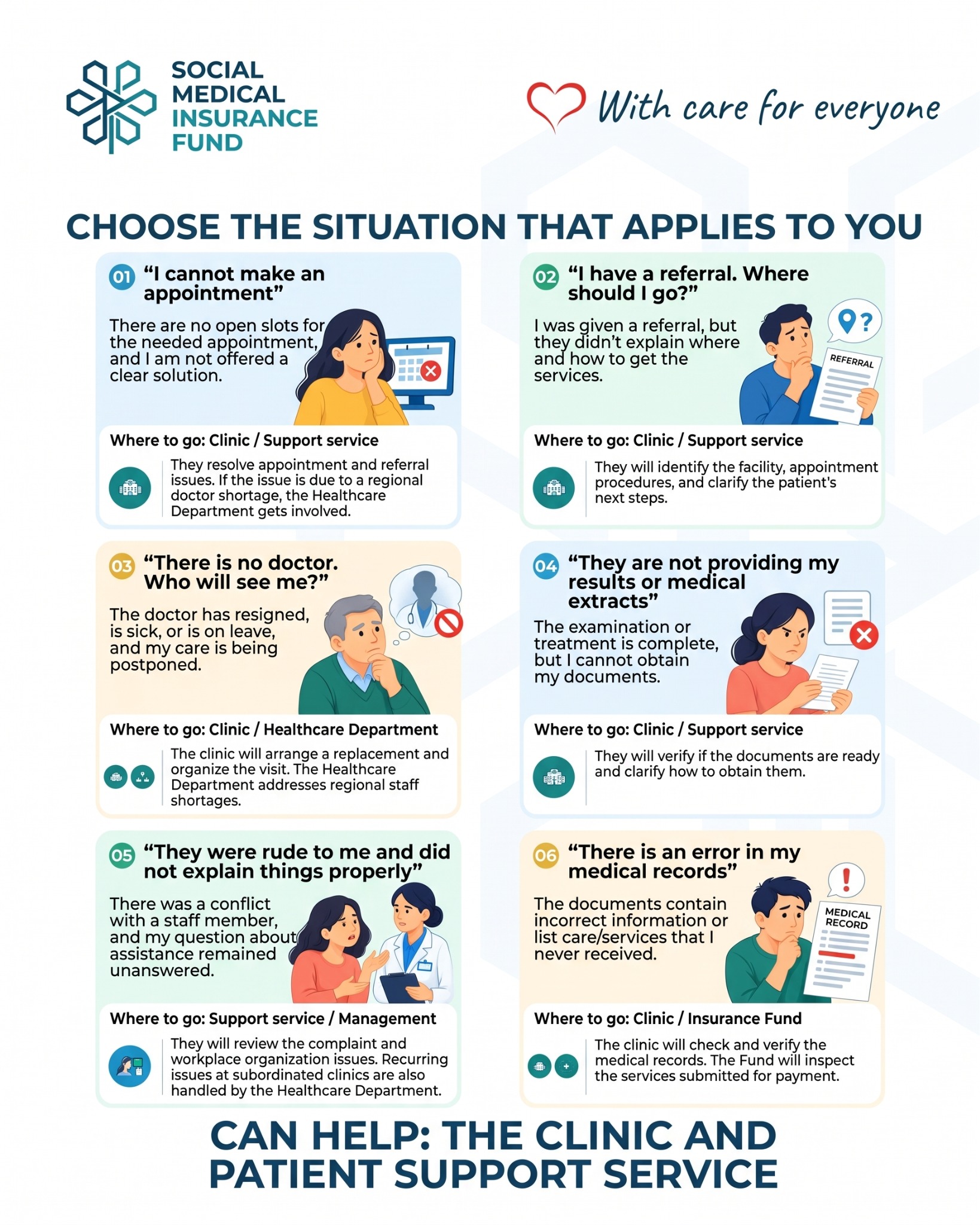
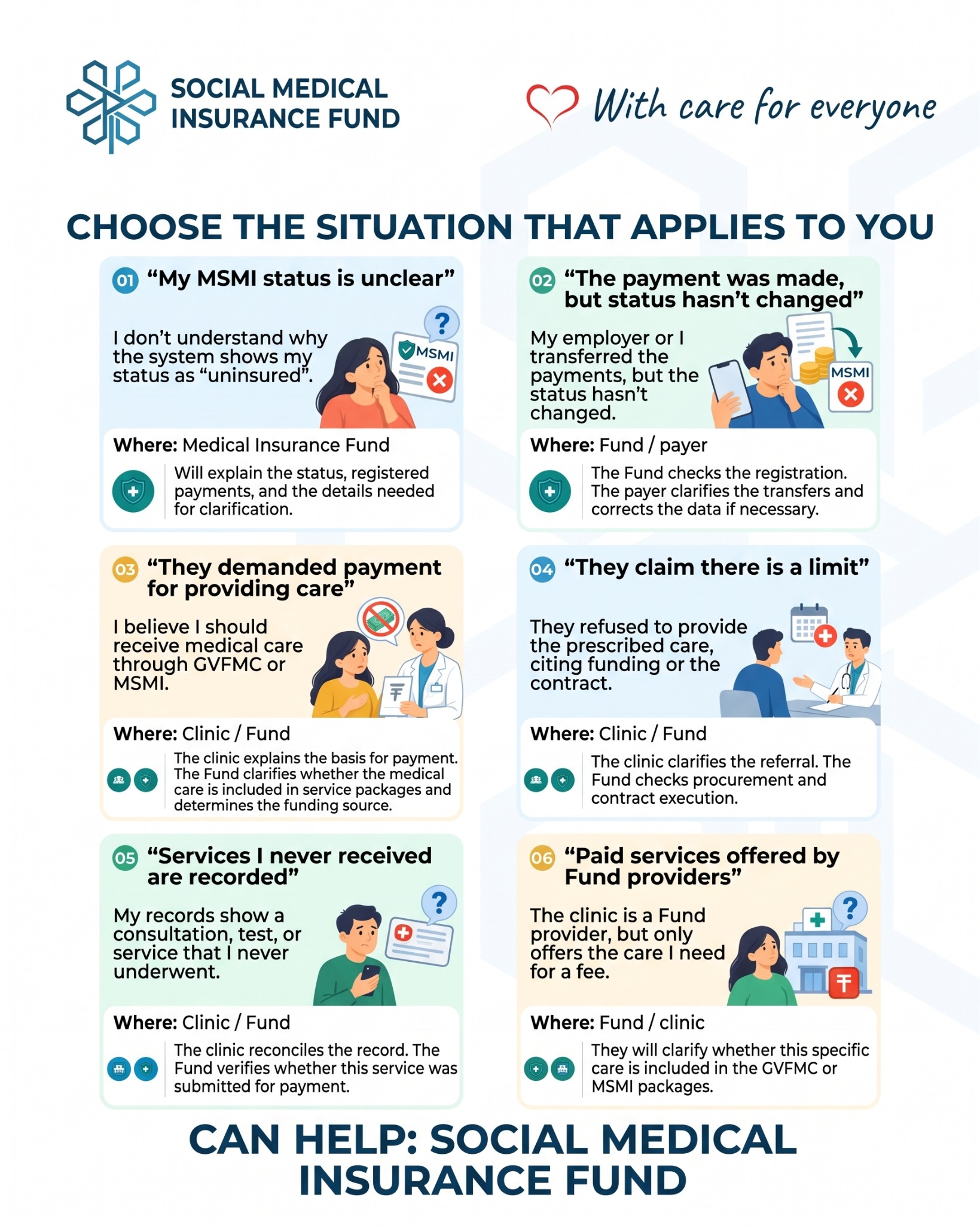
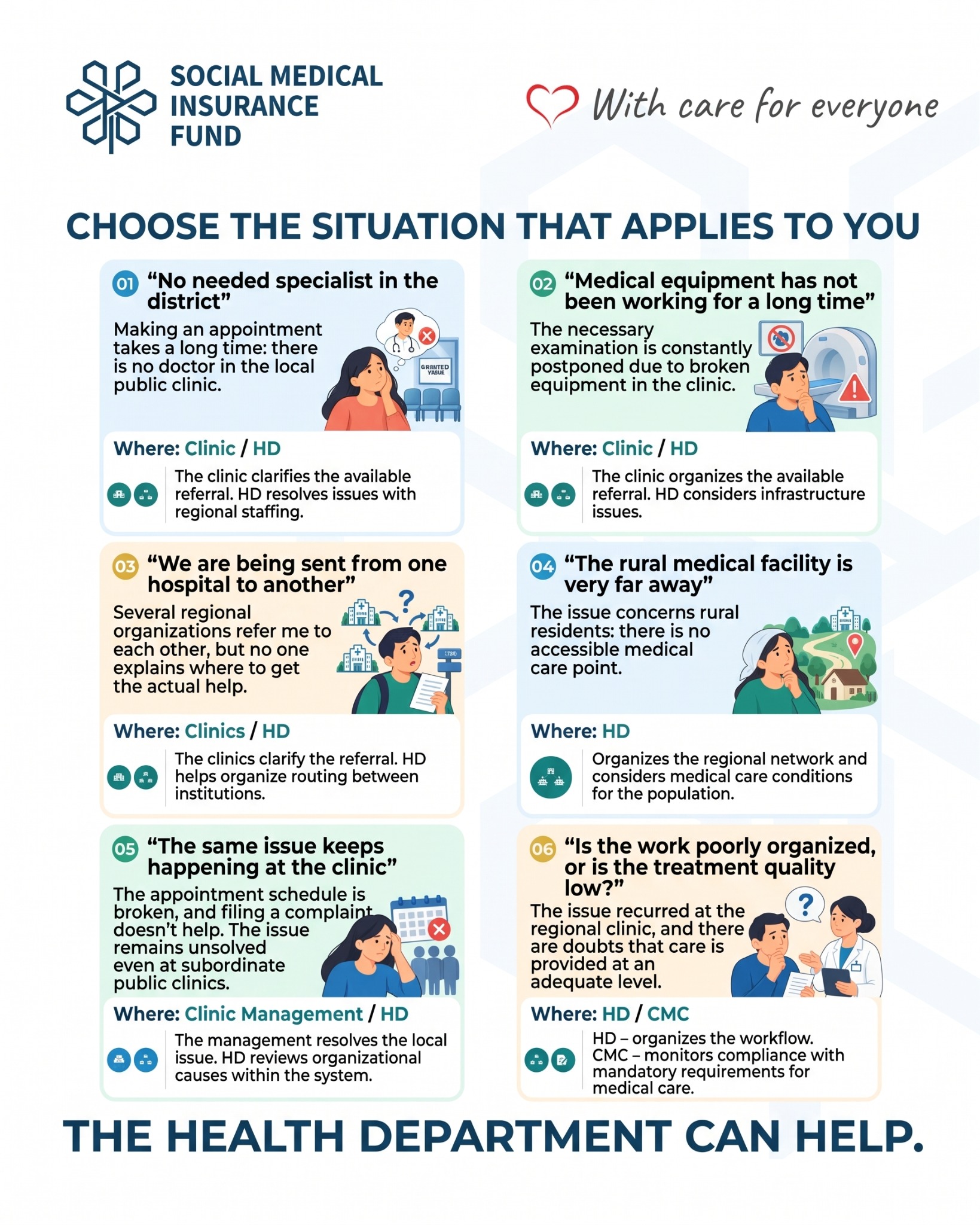
People at the Center of Healthcare: Who Is Responsible for What?
Who explains your test results? Where should you turn if you cannot book a doctor's appointment, are asked to pay for medical care, or have concerns about the quality of treatment?
The Social Health Insurance Fund has prepared a series of informative cards covering situations anyone may encounter. Through clear examples, we explain the responsibilities of doctors, clinics, patient support services, the Fund, and government authorities.
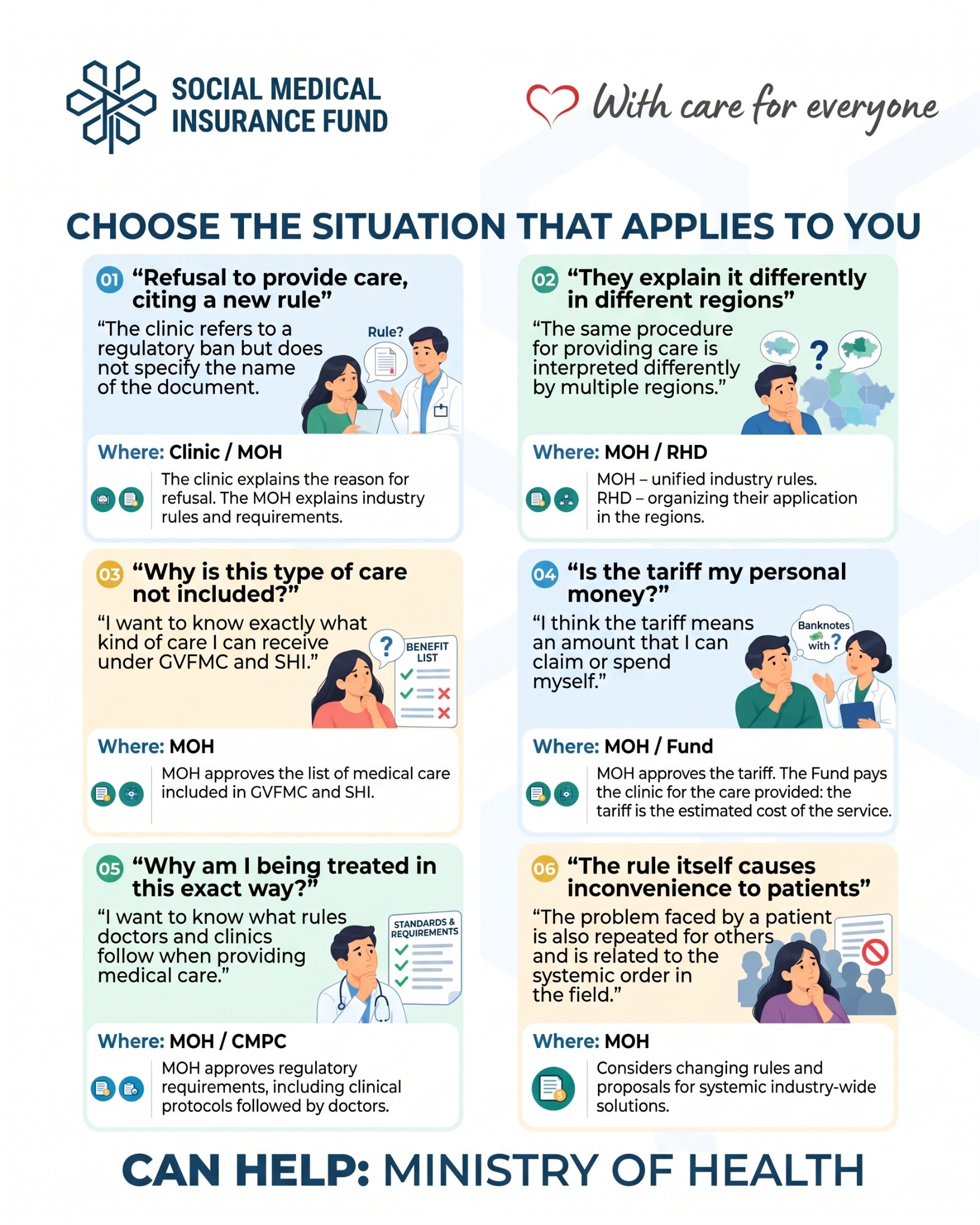
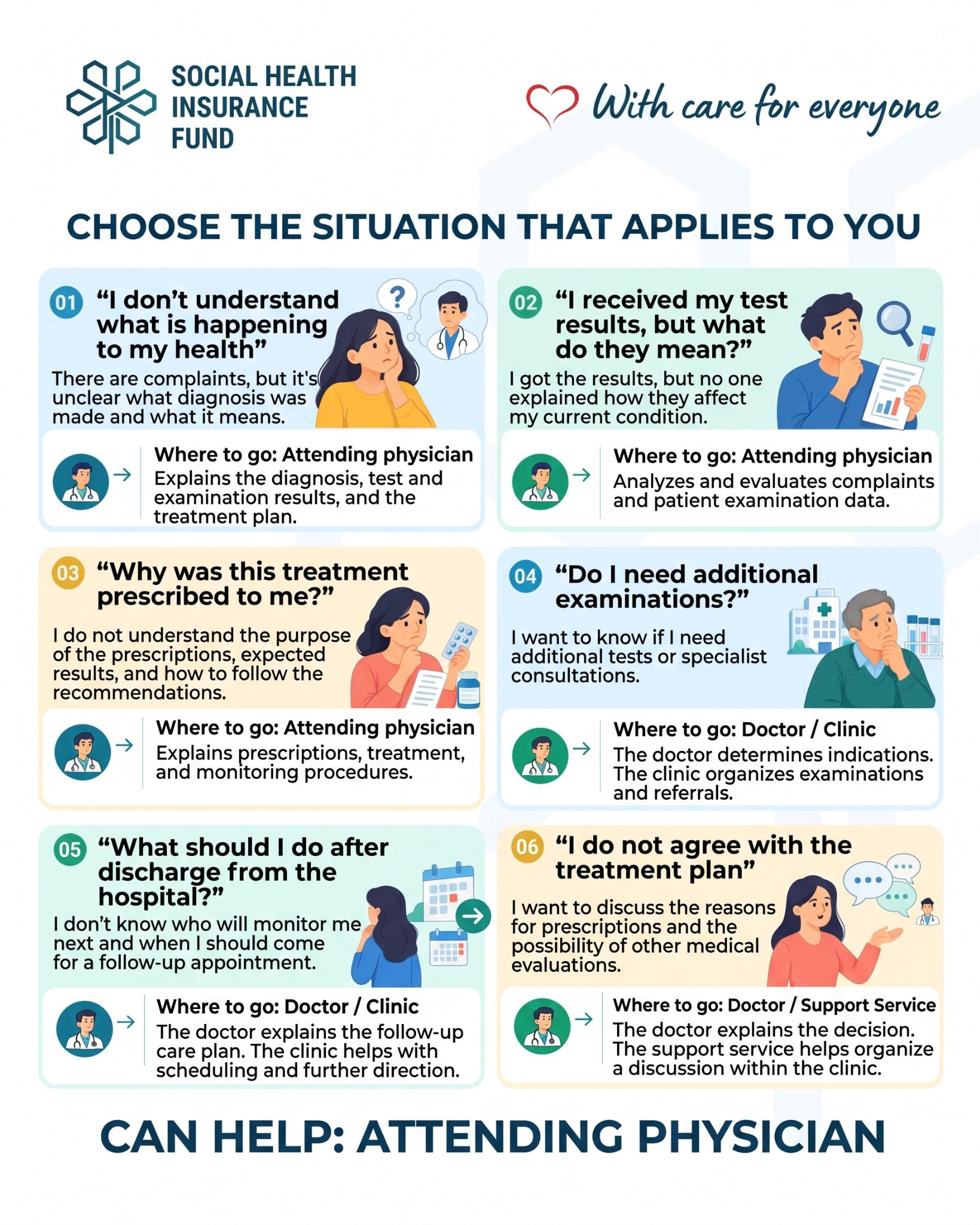
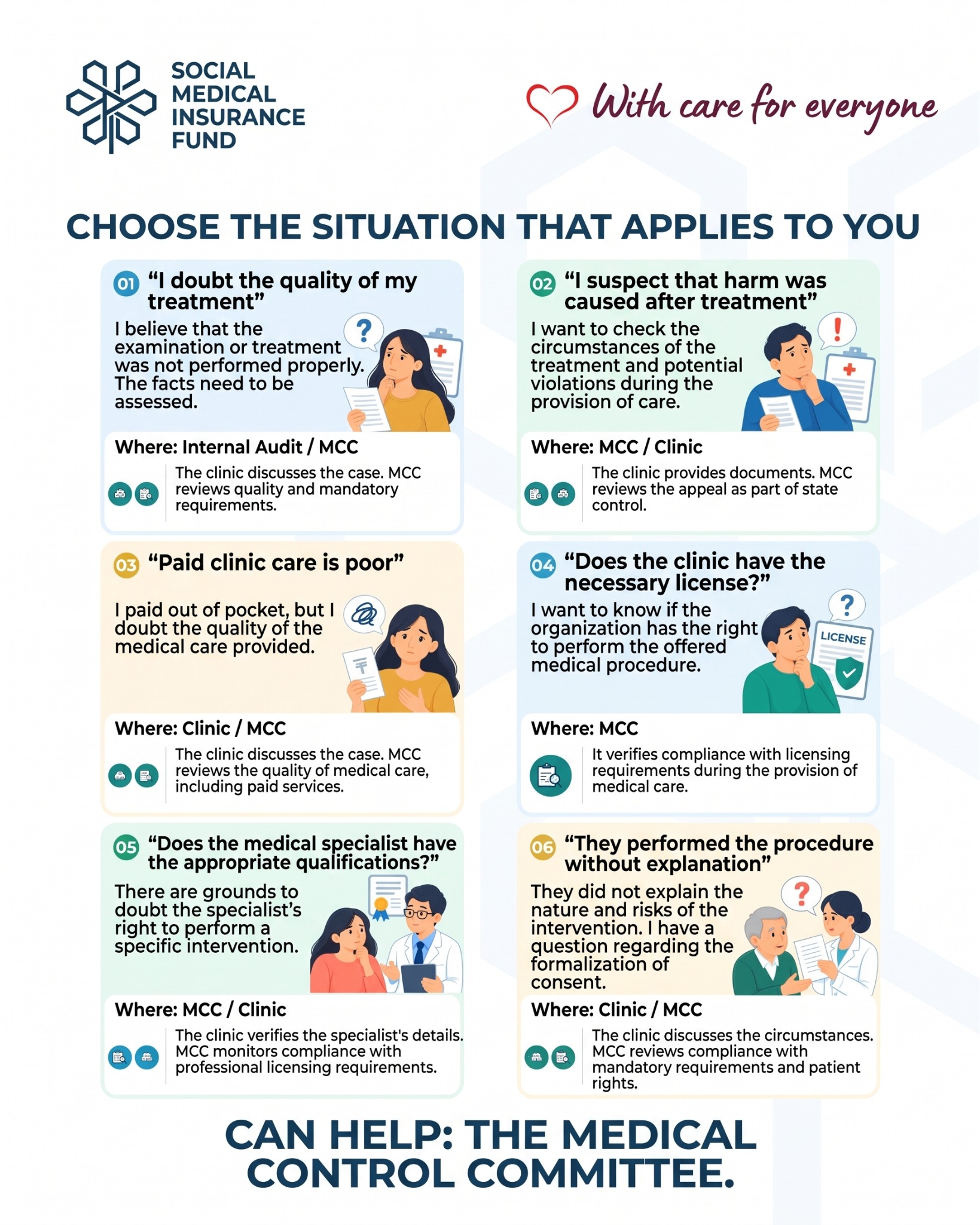
Clinic Stay and Hospital Admission Rules
Visit Your Local Clinic
Make an appointment with your local physician — a general practitioner or therapist — at the clinic where you are registered.
Medical Assessment
The doctor assesses the medical indications and refers you for any necessary diagnostic examinations, laboratory tests and specialist consultations.
Choosing a Hospital
If the indications for treatment are confirmed, the patient and doctor choose the medical organization where treatment will take place.
Registration on the Hospitalization Portal
A clinic specialist registers the request in the Hospitalization Bureau system. The patient receives a planned hospitalization voucher with a unique code.
Waiting for Admission and Receiving a Referral
After the request is approved, the hospital sets the admission date. The clinic issues the patient a hospitalization referral with a barcode.
Frequently Asked Questions
How Can I Get a Copy of My Medical Record or Discharge Summary?
To obtain a copy of medical records, visit the clinic reception with your identity document and submit a written request. The document will be prepared within 1–3 business days.
Does the Clinic Work with Voluntary Health Insurance Providers?
Yes. We work directly with leading insurance companies in Kazakhstan, including Halyk-Kazakhinstrakh, Nomad Insurance, Centras, Interteach and others. Patients are accepted with a letter of guarantee.
Book a Doctor's Appointment or Diagnostic Test
Leave your contact details. Our medical coordinator will contact you within 5 minutes to arrange a convenient time and help you prepare for the procedure.
24/7 · 15/1 Atameken Street, Bolashak Residential Area, Baskuduk Village, Munaily District, Mangystau Region, Kazakhstan